August 28, 2025
10:15 am
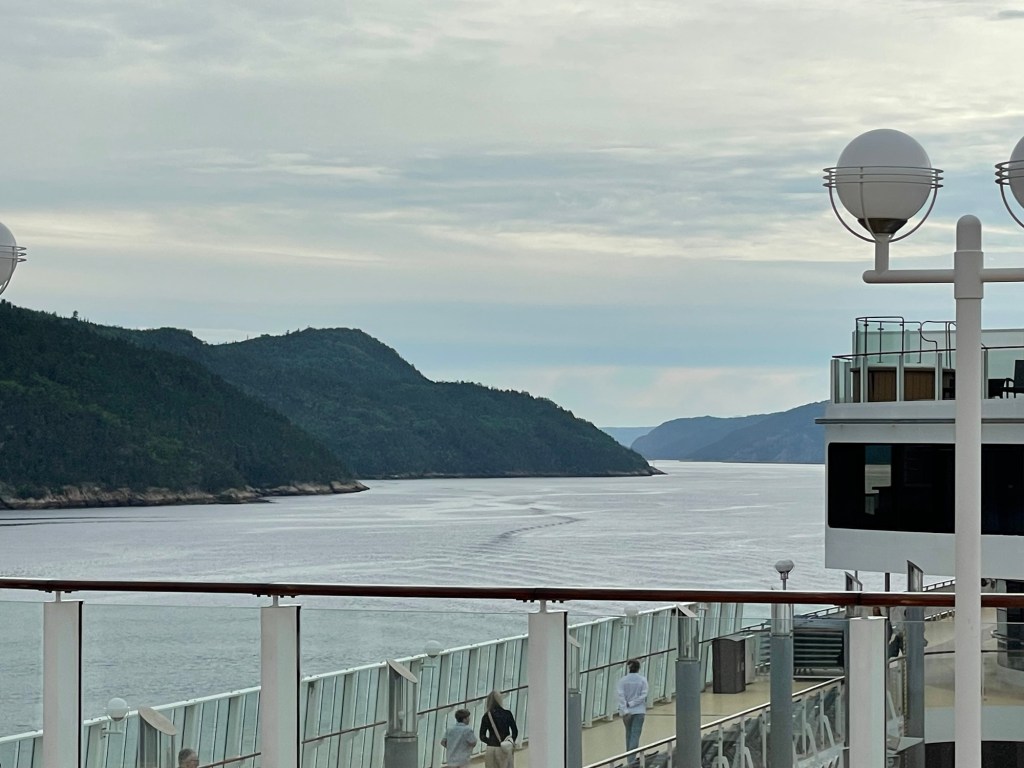
It’s difficult to turn my attention to writing because of the beautiful scenery unfolding outside of our windows.
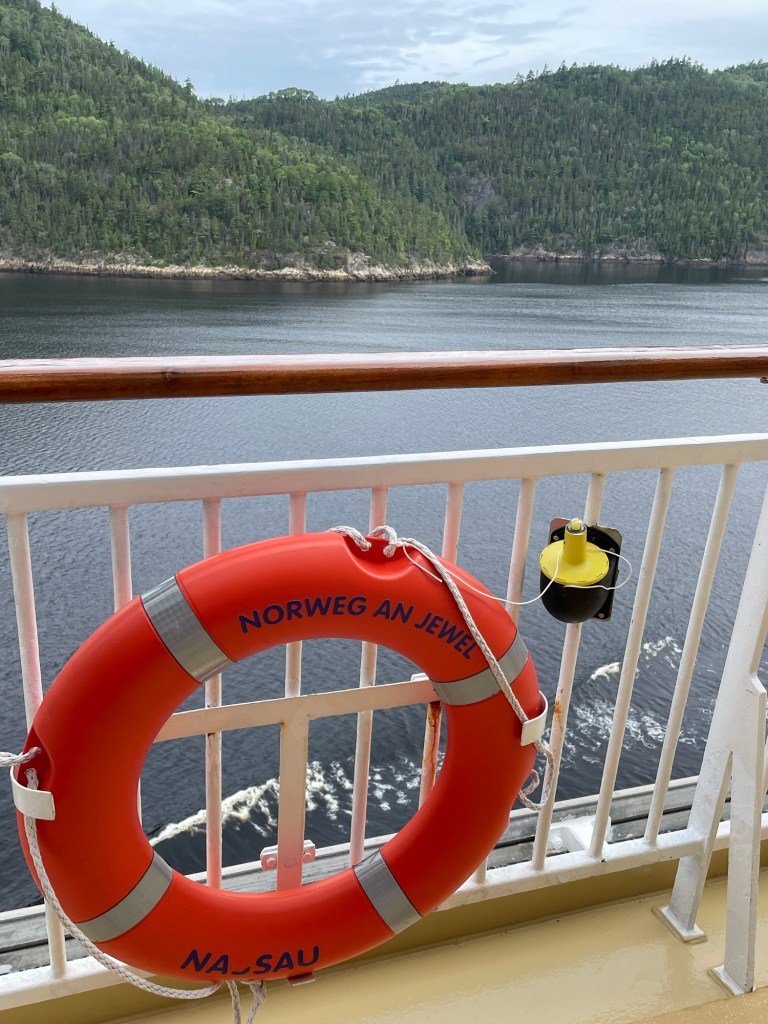
We are moving slowly along the Saguenay River just off the St. Lawrence River in Quebec province. The scenery is spectacular as we pass Saguenay Fjord National Park. Green mountains upon green mountains, with the occasional stone mountain. Every so often we’ll pass under power lines that cross above the river.
Our Captain spotted a beluga a couple of hours ago and joked that they must hear him as they then disappear under the water.
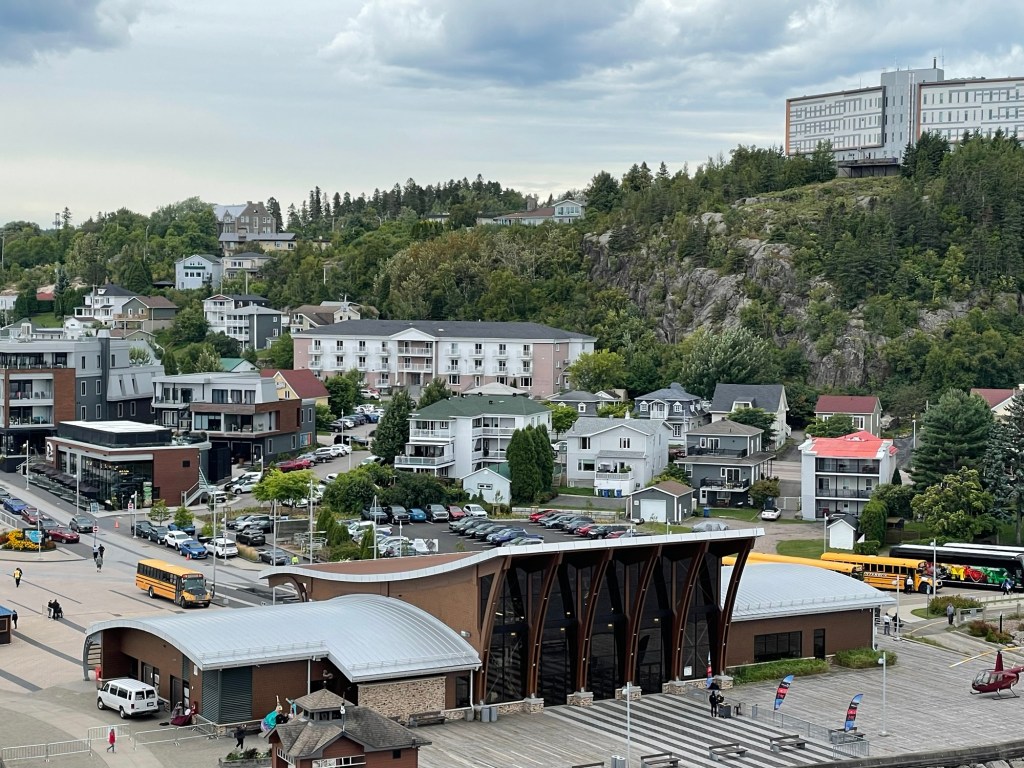
We are heading for the city of Saguenay, specifically its borough of La Baie. The city as a whole has a population of about 144,000 per Statistics Canada. La Baie has a population of 19,000 spread among 101 square miles. Saguenay was formed in 2002 by merging La Baie, Chicoutimi, and Jonquière.
This is our second time in this region. The first was on Splendour of the Seas in 1999, where we did not have a port call—it was a day of scenic cruising. All these years later, after we’ve visited fjords in Norway and Alaska, the beauty of Saguenay Fjord still shines.
11:38 pm
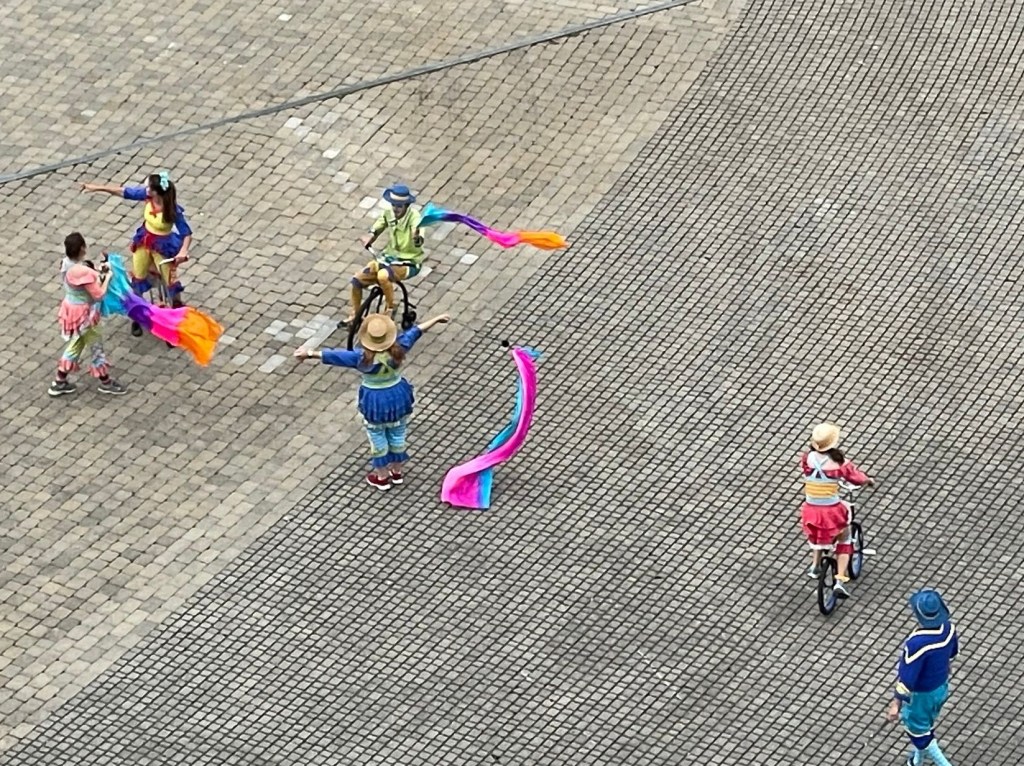
Our ship and her passengers and crew were given a warm and festive welcome by dancers, cyclists, jugglers, and more. They even posed for photos.
Today’s excursion was called New France. It was a short walk to our bus, which was a school bus. It was actually comfortable. There were 35 of us on this tour.
Our tour guide shared some facts about Saguenay, which the locals pronounce SAG-knee. La Baie, where we started out, is the beginning of Saguenay Fjord, which we transited this morning. The fjords are 500 feet deep. Saguenay is First Nations for “where the water comes from.”
Our destination, New France, is a historical representation of Quebec City in the early 1600s. It was built in 1990 for a movie, based on book Robe Noir by Brian More. It was expanded in 2024 for the filming of the television series Barkskins. I read Barkskins last year and loved it. I now have a visual beyond the excellent descriptions by author Annie Proulx.
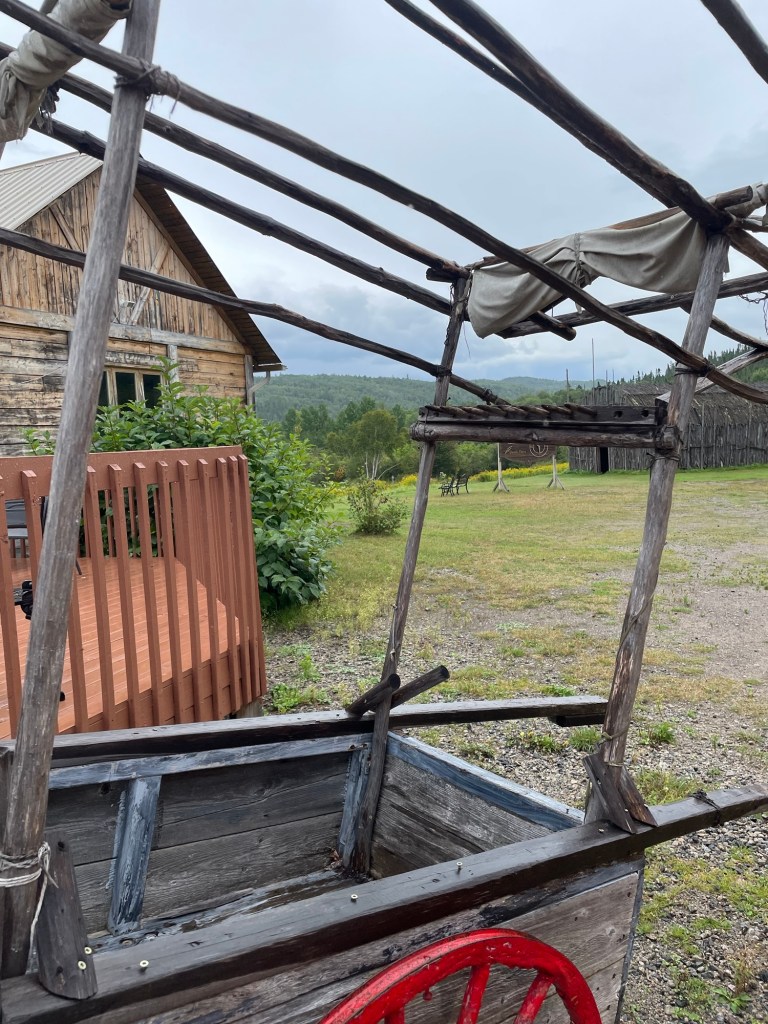
We visited a “long house,” which was used for communal living. Inside were 6 fire pits, one for every family. We learned how they lived with only what they could find—one example was a garden hoe made from a shoulder blade of a moose.
We also stepped inside a residence for women, a convent actually. Young women’s beds were downstairs, simple wooden 4-post beds with cotton drapes. Upstairs, which we didn’t see, was where the Sisters would sleep.
I got a wonderful photo out the multi-paned window of the greenery below and the fjords just beyond.
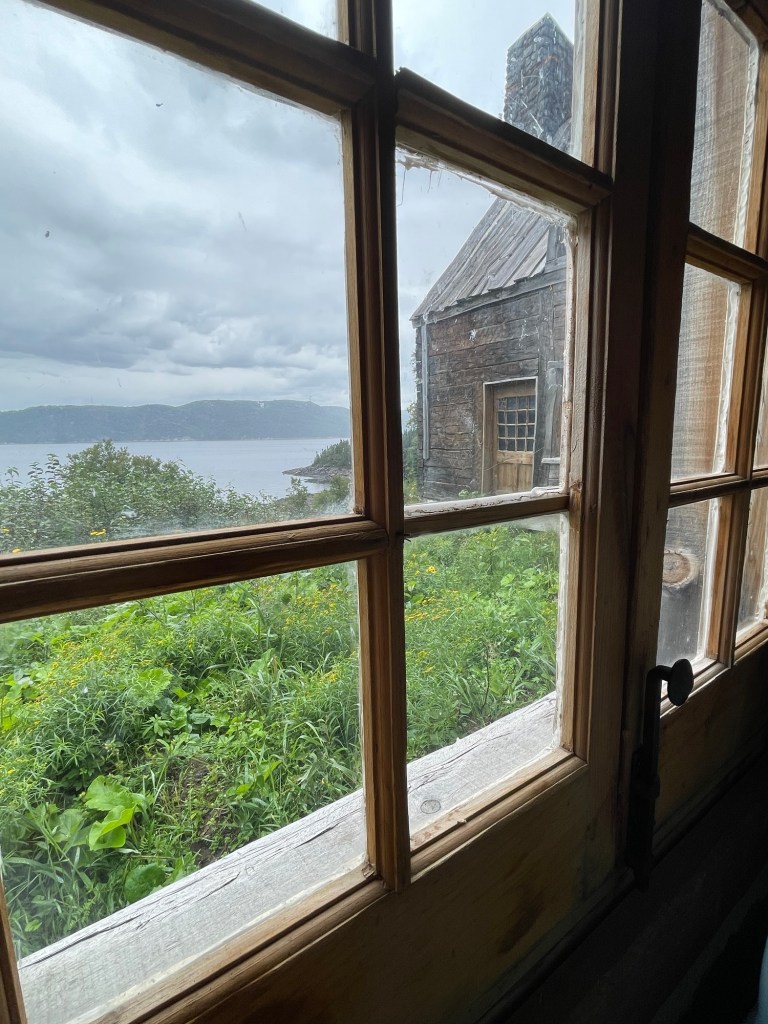
We also saw a church, and a couple of other buildings that reminded me, not surprisingly, of Boston’s Paul Revere House (circa 1680).
Then we returned to the main building for coffee, milk, and a biscuit with fabulous maple syrup on the side.
Our tour guide also pointed out a modern addition—a zip line!
It was a great tour for a first-time visitor who’s into living history museums.
Next up: Disembarkation and Quebec City

